Printing and embroidery on apparel
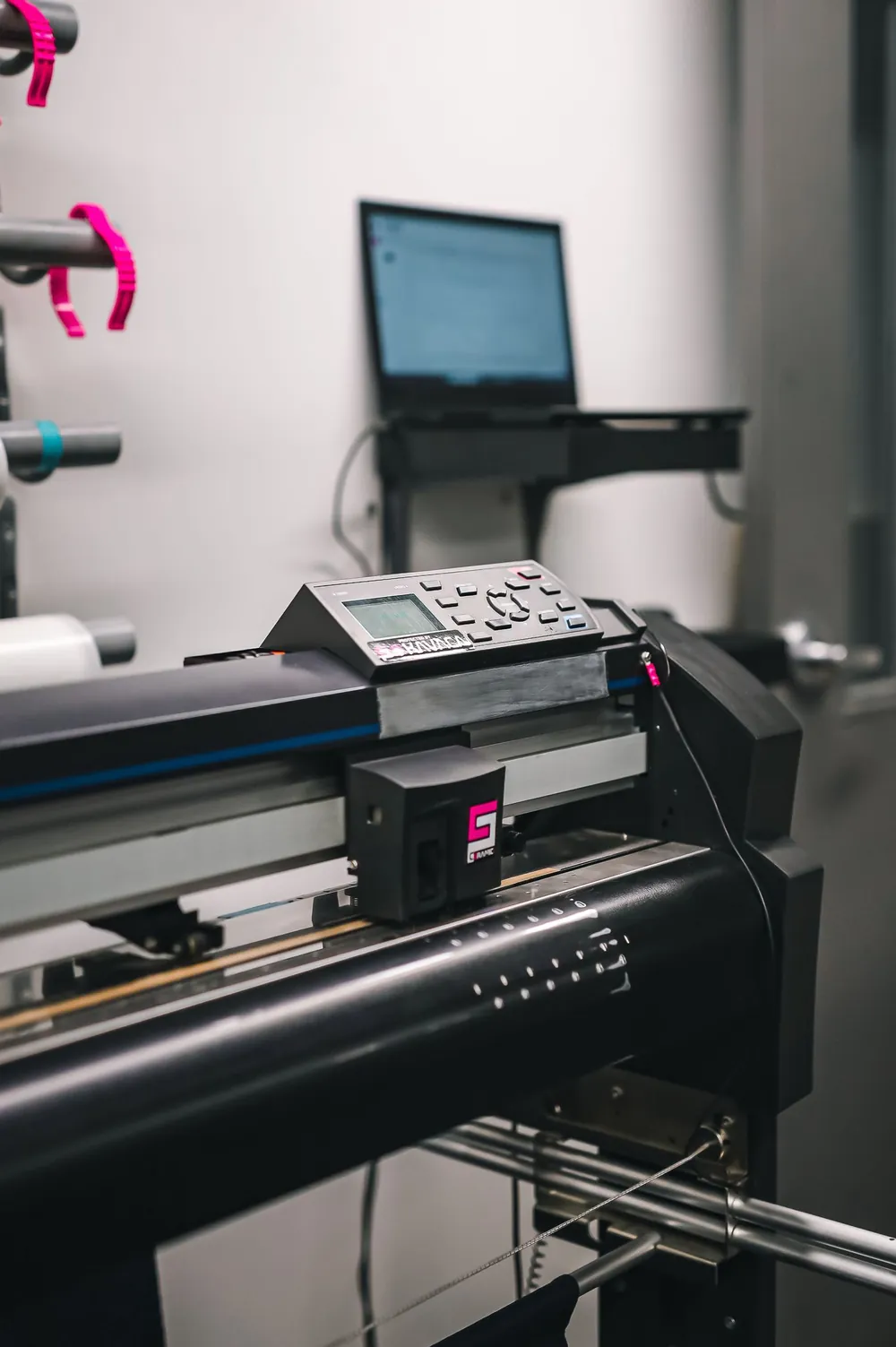
Direct-to-film (DTF) printing presses full-colour designs onto transfer film that is then heat-applied to fabric. It changed short-run garment printing because of its flexibility.
This guide covers how DTF compares to other methods, its uses and its limitations.
Our printing and embroidery pages show what we produce in-house, from single samples to full uniform programmes. For the full range we produce, see our DTF printing service page.
Popular options
Full-colour tees
Photos, gradients and complex artwork on most cottons.
Custom fabrics
Works on cotton, blends, and many materials where sublimation can't.
Small to mid runs
Economical from one piece upward - ideal for samples and merch.
Names and numbers
Team personalisation and numbering without screen setup.
Durable finish
Wash-resistant prints with a soft hand feel.
How the process works
Every order follows the same simple path from brief to delivery:
- Choose the garment, colour and the print or embroidery technique.
- Send your artwork or logo file for pre-production approval.
- We produce a printed or stitched sample for larger orders.
- Full production, quality check and UAE delivery follow.
Buying tips
A few practical points before you place the order:
- Choose DTF for detailed designs and small quantities.
- Use screen printing for large simple-colour runs to save cost.
- Ask for a wash test sample before full production.
- Confirm the transfer placement and pressing temperature are right for the fabric.
Quick answers
What does DTF stand for?
Direct-to-film - the design is printed onto film then heat-pressed onto the garment.
What fabrics suit DTF?
Most cotton and cotton-blend garments; it's the flexible alternative to sublimation.
Is DTF durable?
Yes, with proper pressing it produces wash-resistant prints with good stretch.
How does DTF compare to screen printing?
DTF excels at colour detail and low volumes; screen printing is cheaper in large simple runs.